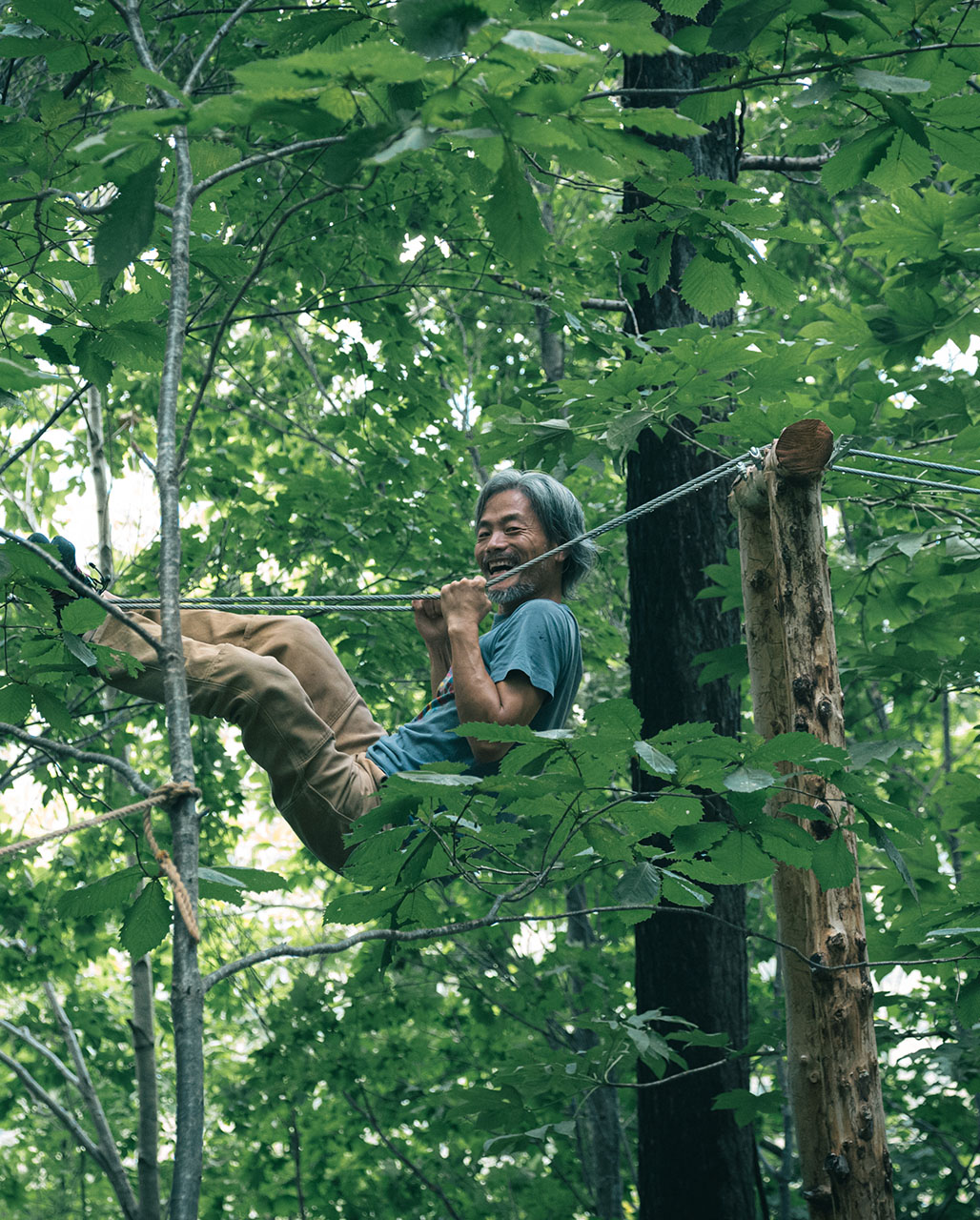
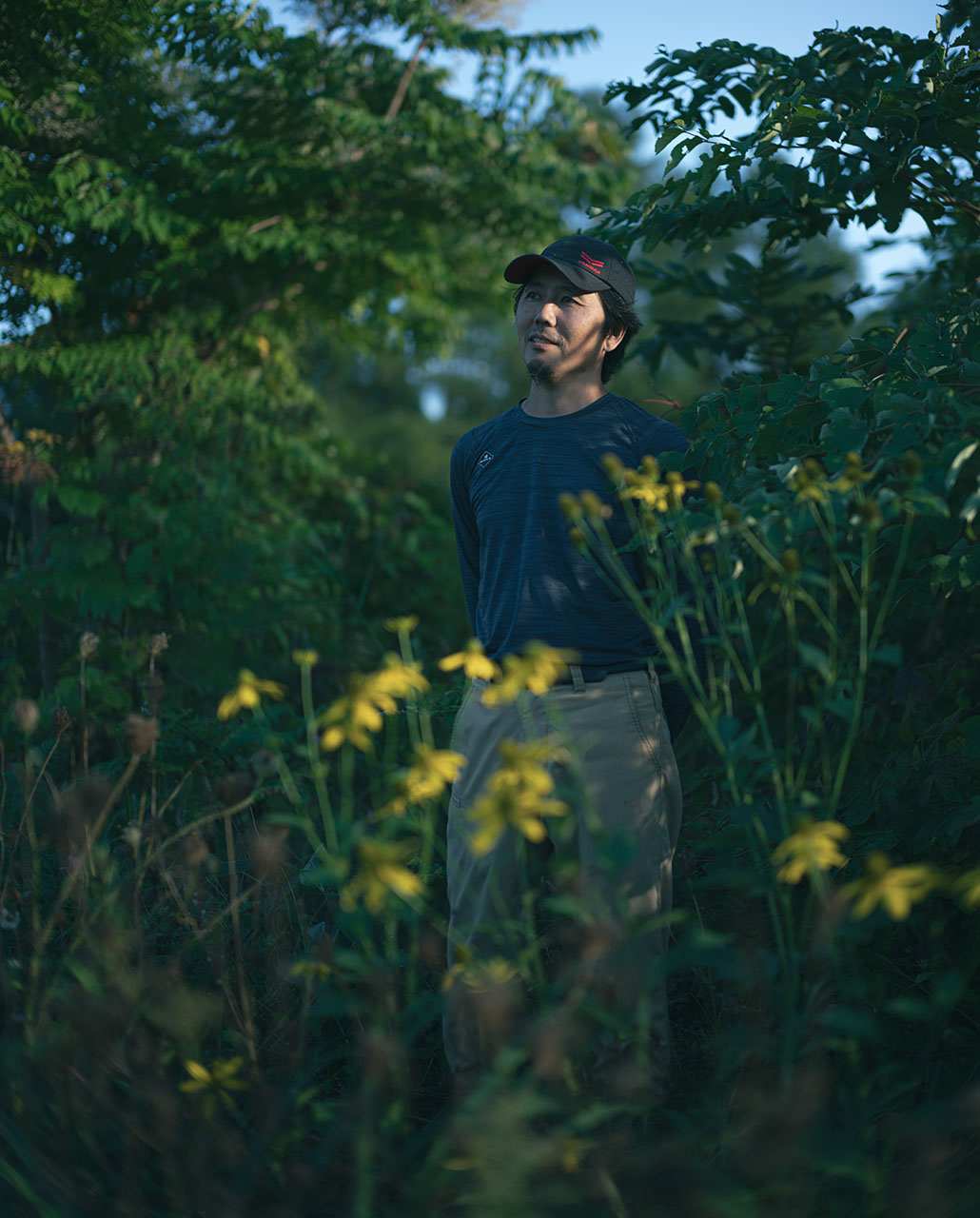
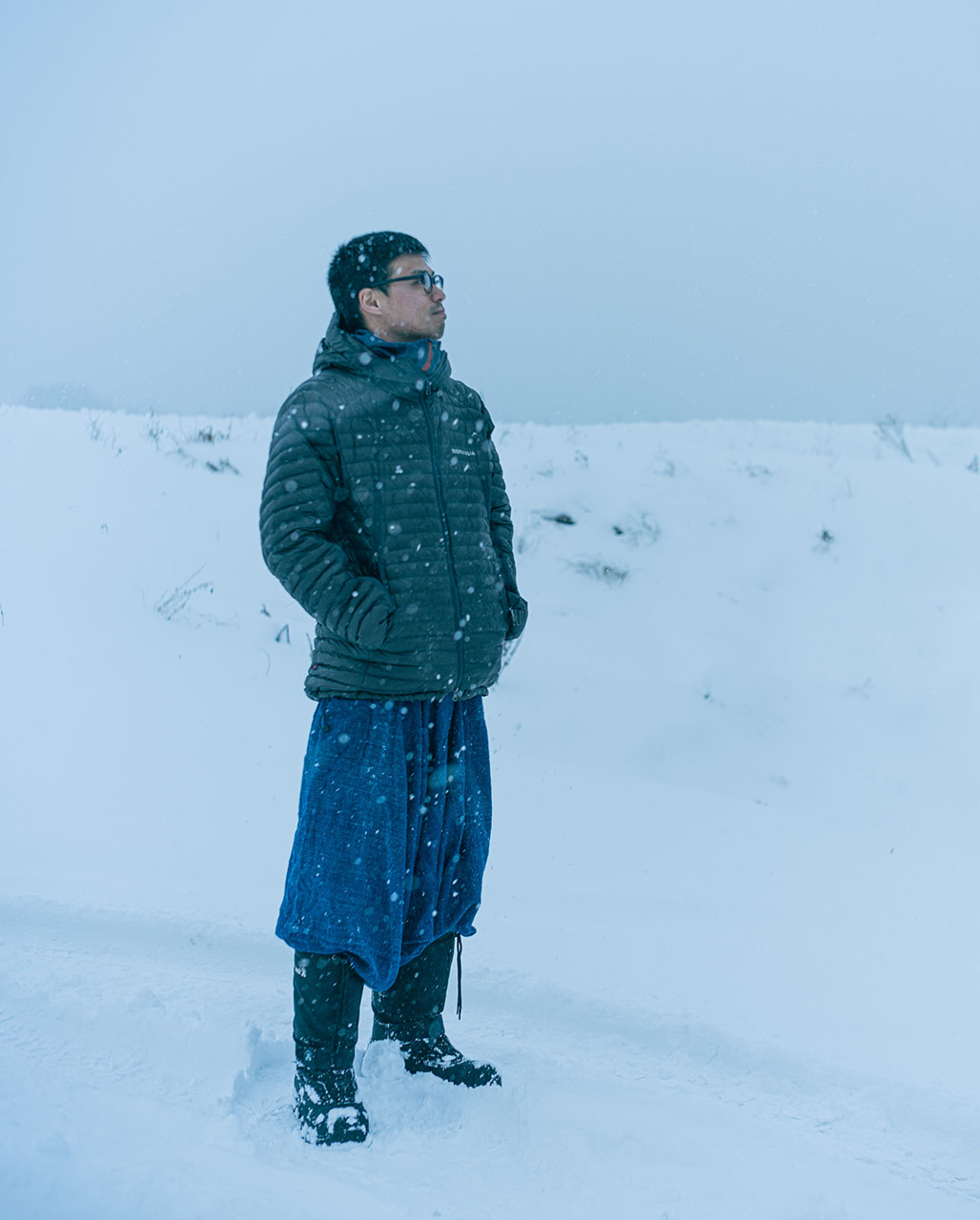
“I begin with a blank slate. I draw out what I sense from my own daily life, searching for the image it holds – its colors, and whether it takes the form of straight lines or gentle curves”.
This is how brewer Ryogo Kitahara approaches sake making.
His process begins by facing a landscape, as if drawing lines and colors onto a blank canvas. Acidity and bitterness are sharp and linear, while umami is rounded and curved. Beyond these sensations directly tied to taste, he also envisions how to translate the depth of green swaying in the wind or the glittering scene of light reflecting off snow into sake.

Born into a sake-brewing family founded in 1750 in Hakushu Town, Hokuto City, Yamanashi Prefecture he spent his childhood constantly kicking a ball. Throughout elementary and junior high school he immersed himself completely in soccer. From an early age he set his sights on becoming a professional player and pursued that goal through dedicated, self-directed training.
He later advanced to Nirasaki High School, a prestigious soccer powerhouse. There, he was confronted with the stark gap between his own abilities and those of his classmates, who ranked among the top players in the prefecture. Still, he refused to give up. He devoted everything to soccer and experienced reaching the top 16 at the national tournament. However, upon graduating from high school, a harsh reality awaited him.
“My coach suggested several universities, but none were competing at the top level. At that point I realized there might be no path forward for me in soccer. I was completely burned out”.
When his path to becoming a professional soccer was shattered, he was unable to find a new goal right away. Perhaps because he had grown up in the environment of a sake brewery, he felt a natural affinity for the flavors of koji and the process of fermentation, which led him to enroll in the Department of Fermentation Science at Tokyo University of Agriculture which was also his father’s alma mater.
Around the age of 20, while still attending university, he received a phone call from his parents asking “Would you consider taking over the family sake business?”. Though conflicted, he made a firm decision: “If I’m going to do this, I will aim for the very top. I will become a maverick in the sake industry”. Behind this resolve was a strong desire never to repeat the sense of setback he had experienced in soccer.
After training for three years at a brewery in Okayama Prefecture, he joined his family’s brewery “Shichiken”, as a Kurando (sake brewer) at the age of twenty-five. Kitahara later referred to this period as his ‘dark age’. There was no light in the brewers’ eyes and sales continued to decline steadily.
“Even though I knew things couldn’t go on like this, I had no clear idea what to change or how to move forward”.
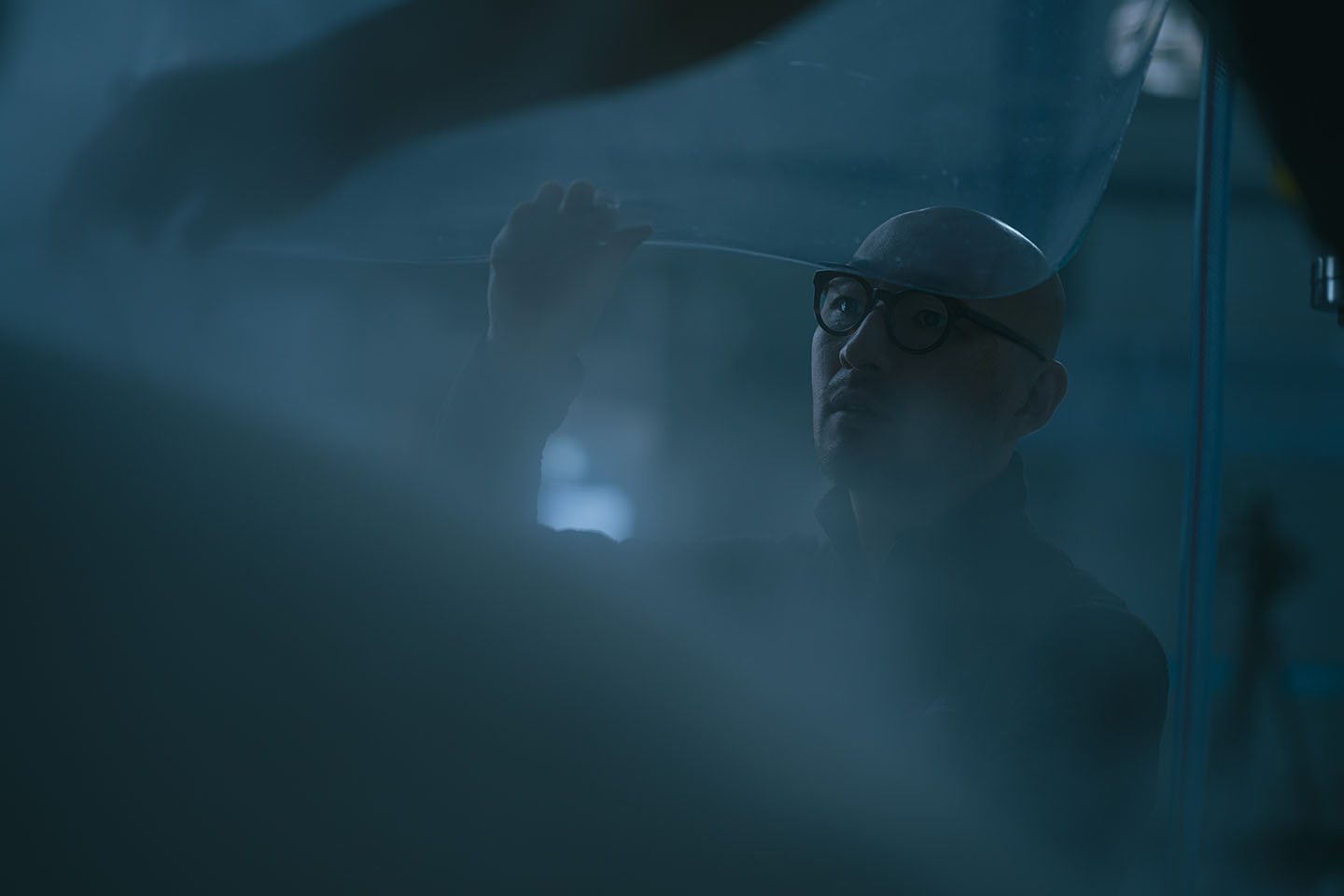

For the first five years he desperately clung to his seniors, driven by a desire to earn their recognition. At times he was subjected to unreasonable treatment, yet he endured it, persistently searching for his own path. At the age of thirty, he became the head brewer, and only then did his work begin to gain recognition in competitions, with tangible results finally starting to emerge.
“How to truly engage with each individual batch of moromi (fermentation mash) – that was the question I kept asking myself. My counterpart is a microorganism that never speaks. The only information I can rely on comes from temperature, appearance and aroma. Everything depends on how far I can extend my imagination from these fragments and how accurately I can read what will unfold next”.
He paid meticulous attention to every detail – from the placement of tools to how they were handled. While Kitahara’s methods sometimes met with resistance, gradually more and more cellar workers came to recognize his approach. Believing that “the atmosphere within an organization affects the flavor”, he eliminated overtime work and focused on creating a more comfortable working environment. Sales began to rise and production volumes reached their targets. Everything seemed to be going smoothly, yet a sudden doubt arose in Kitahara’s mind.
“This is the world I planned for, yet as I approach forty, I can’t help but wonder if I’ve lost something important”.
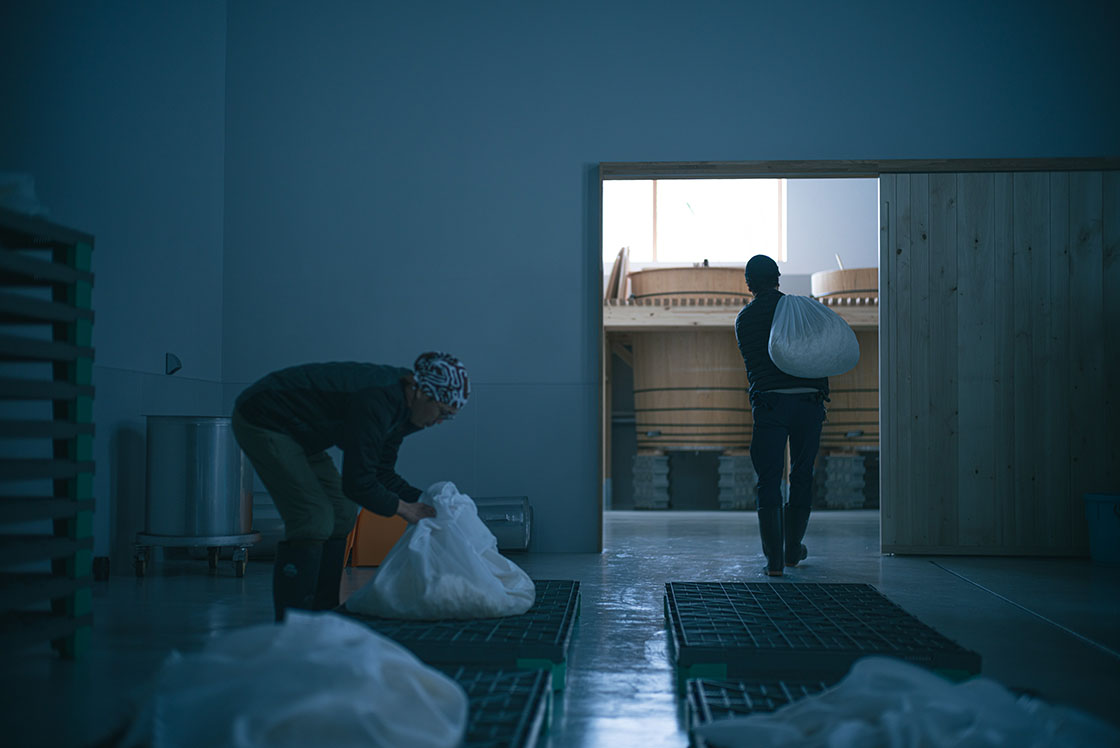
During those days of lingering doubt, a turning point arrived in an unexpected form. It came from Rankoshi Town – a renowned rice-growing area in the Shiribeshi region of southwestern Hokkaido. When trial cultivation of sake rice failed to produce satisfactory results, Kitahara was asked for advice through an acquaintance.
“As I spoke with people involved in agricultural policy and listened to their concerns, I began to think – then I should make sake in Rankoshi. It happened to coincide with a period when I was already reflecting on what my next stage would be”.
In 2024 he relocated to Rankoshi Town. A range of considerations lay behind this decision. During his time at Yamanashi Meijo, he had increased the proportion of locally grown rice to 90%. However, the COVID-19 pandemic created uncertainty in sales severely disrupting production plans. As a result, distance emerged between the brewery and local producers, forcing reliance on rice from other regions as well as older stock.
“I felt that something was off. Even if sales were to slow down, I began to believe it was essential to return to the core of what it means to be a sake brewery and to focus on brewing that values its connection with the local communities. Sake cannot exist without rice. Are breweries truly paying attention to farmers, to the ecosystems of the rice paddies and to the natural environment? It became painful to realize how much we had been turning a blind eye to these things in the name of economic logic”.
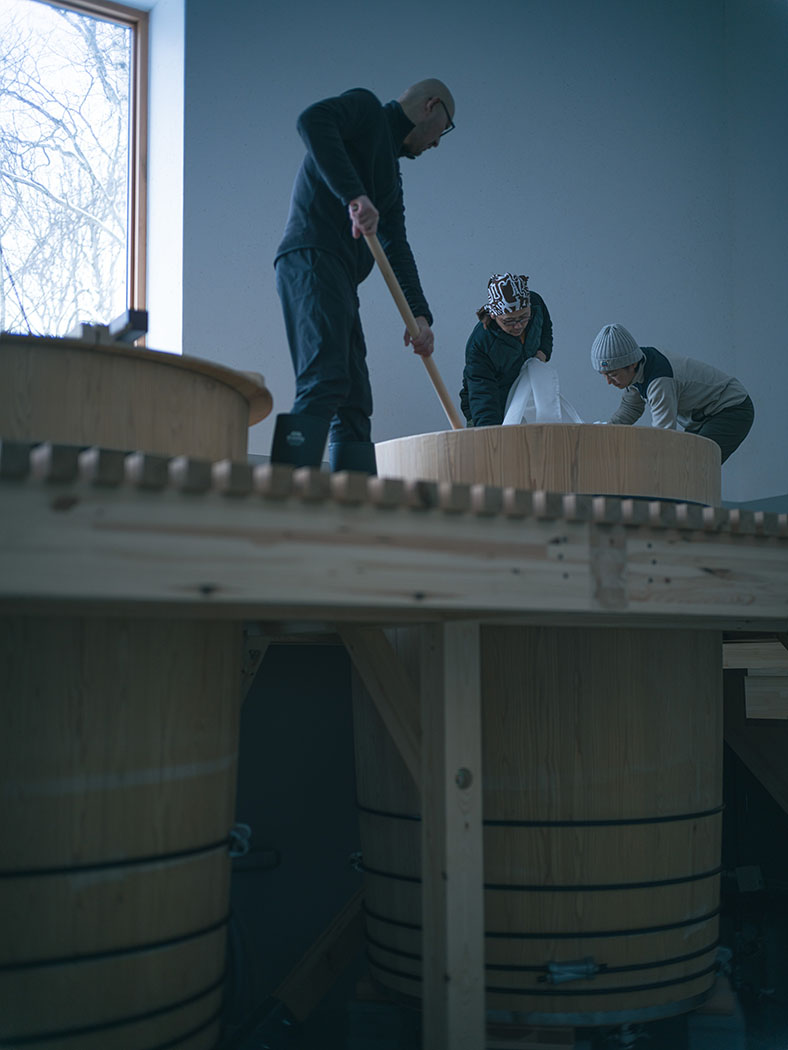
At the same time, Kitahara began to question the structure of the sake industry itself. Since peaking in 1973 the market has been in steady decline. The rise of wine and shochu, along with the diversification of food culture are often cited as reasons. However, Kitahara believed that the fundamental problem lay within the sake industry itself.
“For a long time, the sake industry has tried to increase value by focusing on how much the rice is polished. Yamada Nishiki from Hyogo Prefecture has become the dominant brand and as a result most Daiginjo (top-quality sake brewed from rice grains milled to 50% or less of their weight) sakes tend to taste quite similar from one brewery to another. In that environment, it is the sake with the best ‘cost performance’ that sells. I decided not to step onto that playing field of chasing value through rice polishing. Instead, I chose to create my own”.
Kitahara has been exploring ‘Sparkling Sake’ since 2014, releasing the ‘EXPRESSION’ series along the way. In Rankoshi, he decided to establish a brewery dedicated exclusively to ‘Sparkling Sake’, using locally grown Nanatsuboshi – a table rice rather than a traditional sake rice as its raw material.
“Just as wine and sparkling wine exist as separate categories, I want ‘Sparkling Sake’ to stand on its own – not merely as an extension of traditional sake. I want to create a flavor no one has ever experienced before, something that doesn’t end with the act of drinking, but sparks a change in the way one lives”.
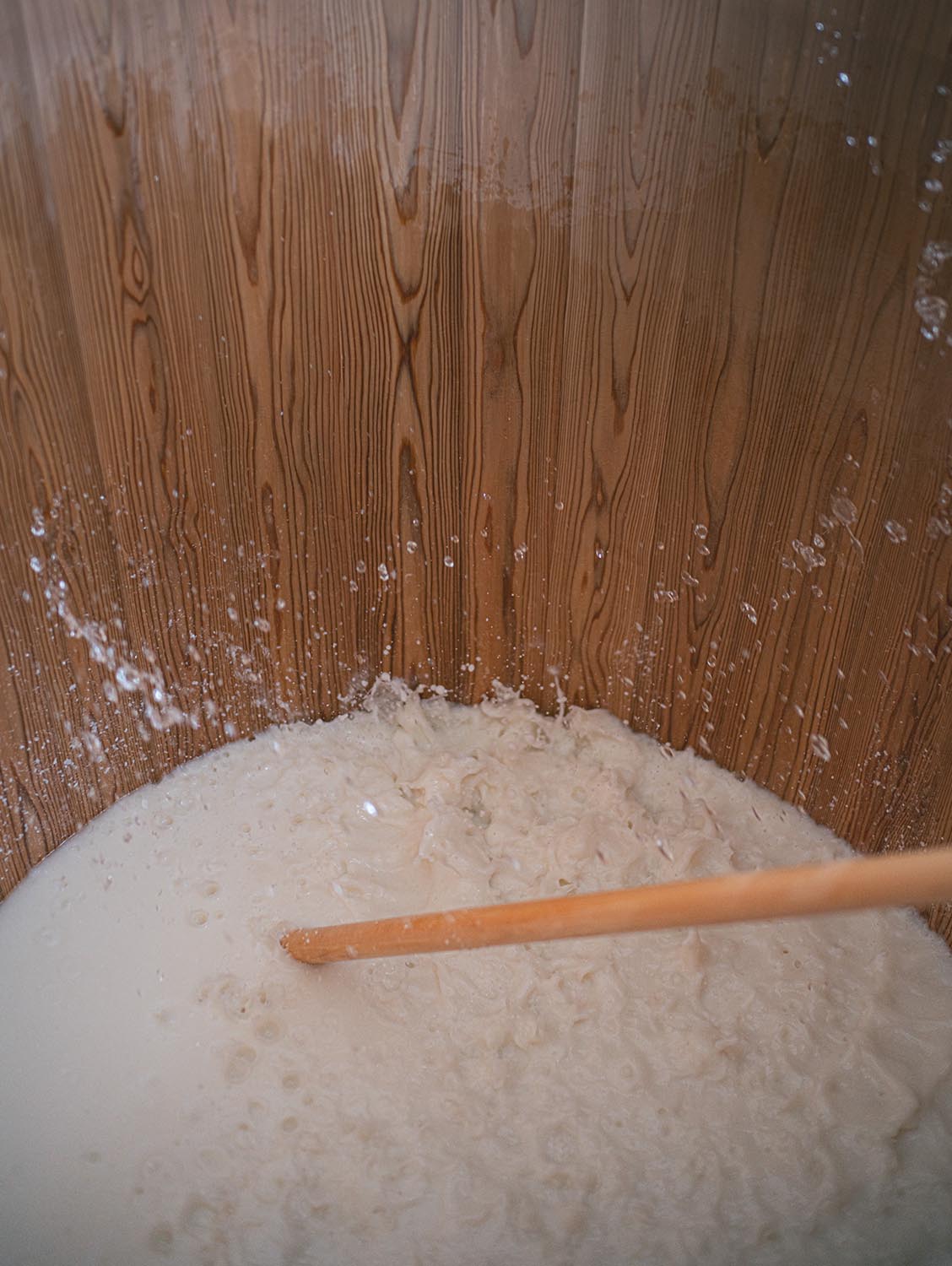
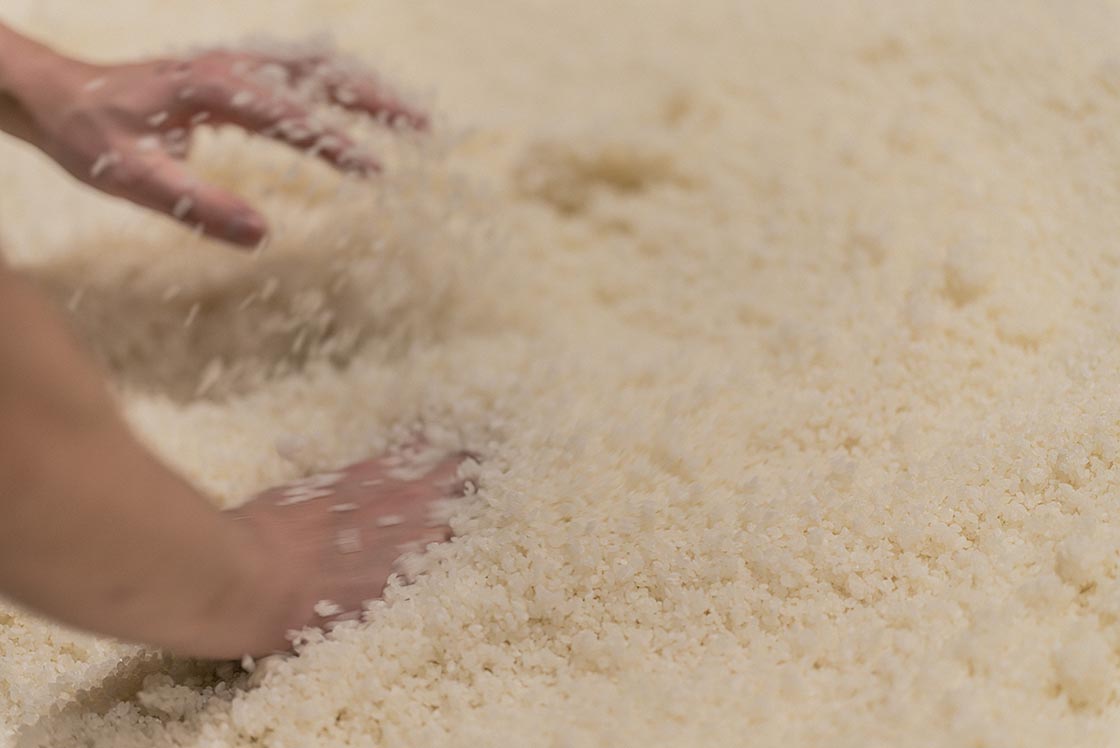
Having made up his mind, he began searching for land on which to build a brewery in Rankoshi Town. He drove from place to place, but none felt decisive. Then, one day, he encountered a 3.6-hectare forest.
Many forests in Hokkaido have been clear-cut several times since the pioneering era, and as a result, the trees in many areas are relatively slender. This forest, however, was different: it contained large mature trees and a rich diversity of species. Moreover, a small stream ran through it.
“The moment I saw the forest, I could feel life itself”
This powerful encounter came to define the brewery’s style.
Living in the forest, the sensations they experienced there began to shape both the brewing methods and the aging process. The forest became the wellspring of inspiration.
“Just before moving here, my wife and I talked about what to name the new brewery. Since we were going independent, one option was to take characters from my own name. But we felt that the word that truly deserved to remain tied to that land wasn’t Kitahara – it was Mori”.
And so, Mori No Brewery was born.
It feels as though distortions have emerged throughout the world and people are living their lives encased in armor. By coming to the forest, perhaps they can cast off what they carry and recover their sense of humanity. I came to feel that the forest holds such power.
“To brew sake while living in the forest is, for me as a brewer, the greatest happiness. To work with nature is to live honestly. Sake brewing is the way I live my life. And if guests who come to this forest can even slightly narrow the distance between themselves and nature, and if the sake from Mori No Brewery can quietly accompany them in that process then there is no greater fulfillment for me as a maker”.
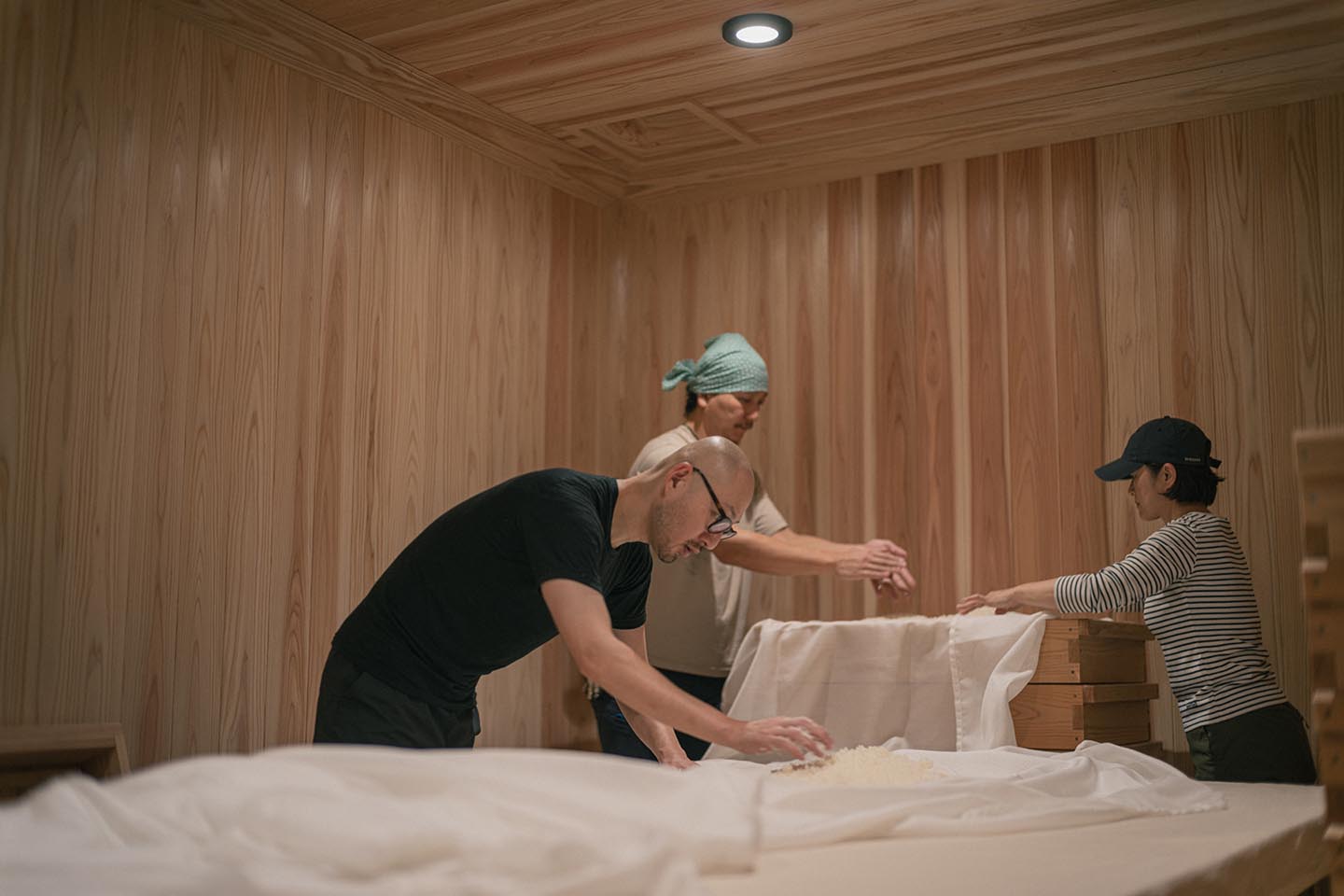
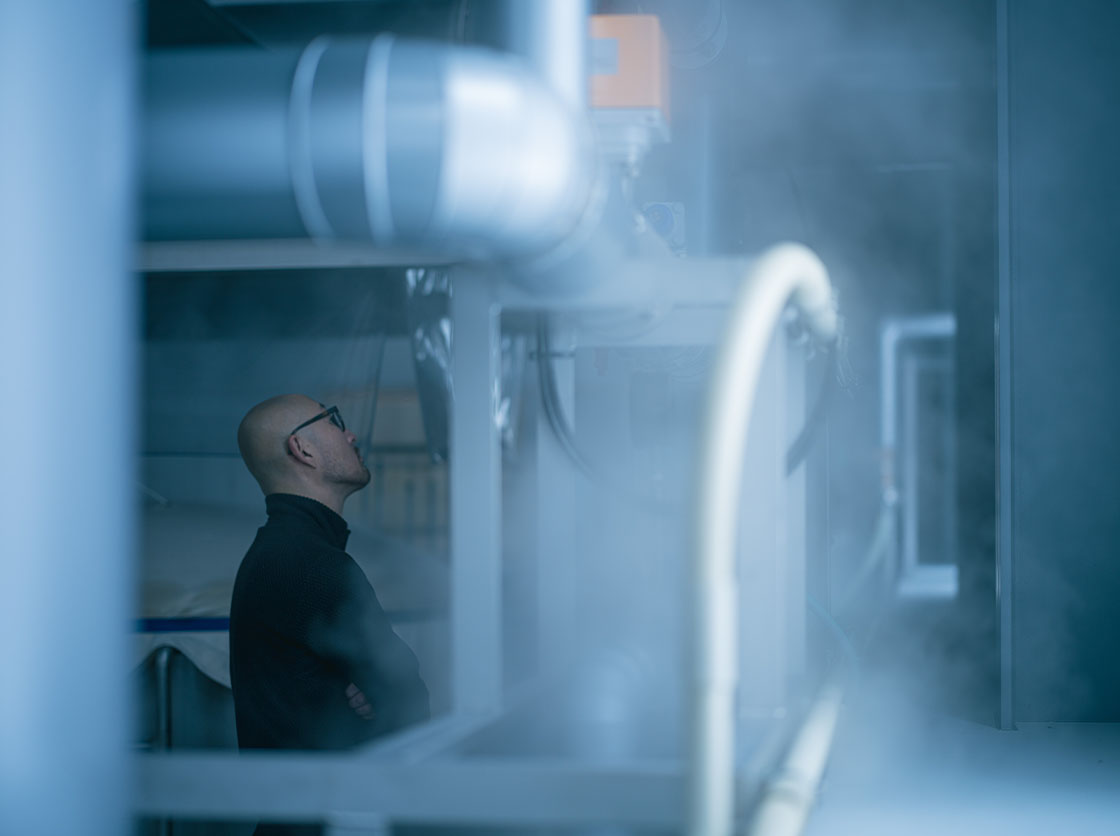
He was born as the second son of a sake-brewing family whose brewery, now known as Yamanashi Meijo, was founded in 1750 (the 3rd year of the Kan’en era). He studied brewing at Tokyo University of Agriculture and after graduating gained experience in the United States and in Okayama, Japan. In 2008 he returned to the family brewery, becoming the first member of the founding family to enter the brewing floor and work as a sake brewer. In 2014 he was appointed head brewer, where he led numerous initiatives to refine brewing methods, implement internal reforms and expand both the creative and commercial possibilities of Sparkling Sake. His involvement in experimental sake rice cultivation in Rankoshi Town, Hokkaido, in 2022 became a turning point, ultimately leading to his relocation. In 2025 he established Mori No Brewery in Rankoshi Town.